
Talking to Teens
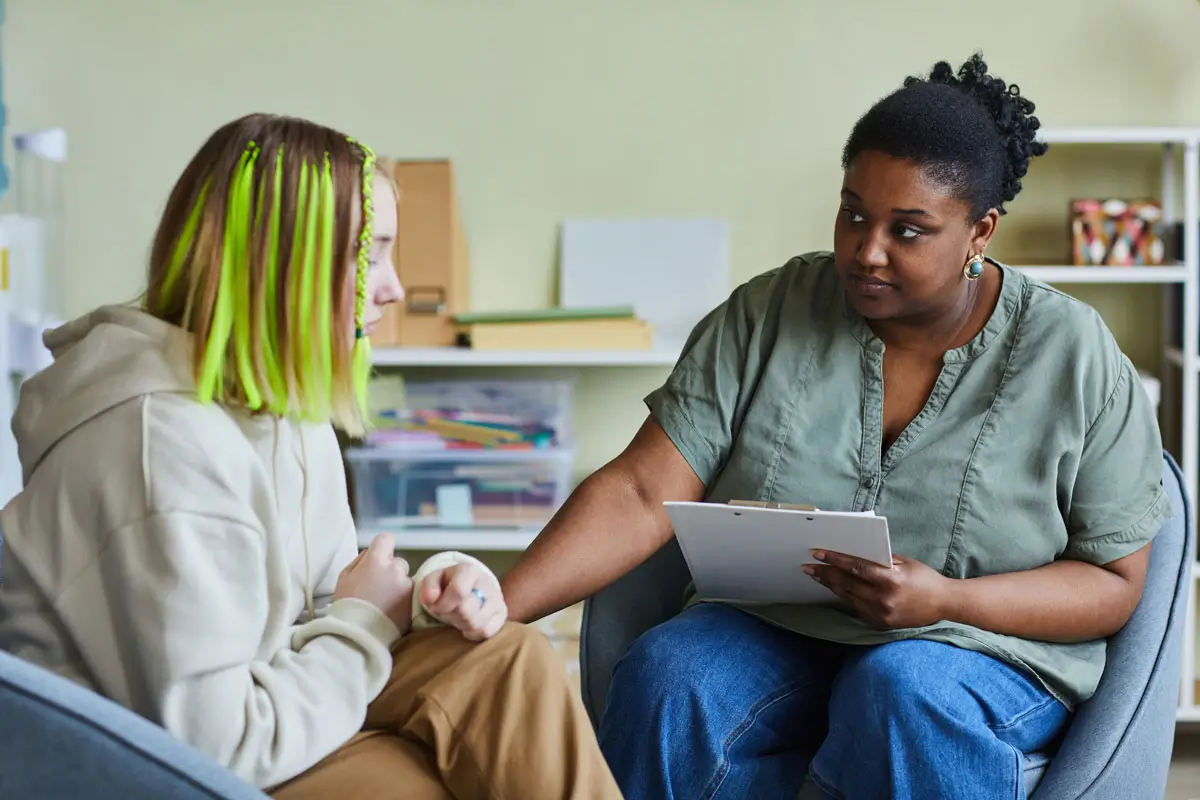
1 in 3 adolescents in the United States experiences dating violence.
There is hope when a teen you care about is in an abusive relationship. Call the Sarah’s Inn 24-hour crisis line for information about Sarah’s Inn services for teens and help with creating a safety plan.

24 Hour Crisis Line
(708) 386-4225
Tips for Supporting Teens
1
Do not blame your teen for being in an abusive relationship or assume that they want to be in the abusive relationship.
2
Encourage your teen to build a healthy lifestyle that provides a social buffer against abuse. Quality time with friends and family makes a difference, as does pursuing new interests with people who share those interests.
3
Guide your teen toward a sense of confidence and freedom by helping them develop a process for making good decisions. Help them make a list of all possible options when presented with a choice, weighing the advantages and disadvantages of each choice.
4
Prioritize your teen’s safety by taking time to listen and understand their individual situation. Even if your teen ends the relationship, the teen’s former partner may continue their violent behavior through stalking and intimidation tactics. Focus on safety planning and do not put pressure on your teen to leave an abusive relationship before a safety plan is in place.
5
Do not force your teen to attend counseling or suggest that they need a psychologist. Instead, present counseling and teen services at Sarah's Inn as an option available to them that they can choose, and support them in their choice.
Starting the Conversation
Here are some ways to start the conversation about dating violence and healthy relationships with your teen or child.

Choose one couple you know of who you think has a good relationship and one couple who you think has an unhealthy relationship. Why did you pick these couples? What are the characteristics you like and don’t like?
What are some things that you like/don't like about your friends and how they treat you?
What does it mean to stand up for yourself? When you stand up for yourself, how does it make you feel? Do you think you are being strong, bossy or pushy? Why?