
Identify Abuse
Signs you can look out for if you suspect a friend, coworker, or loved one is being abused
What is Domestic Violence?
- DV is a pattern of behaviors used to gain and maintain power and control in a relationship.
- Survivors often feel isolated and alone.
- Aspects of DV are normalized by society, and survivors can feel that no one will believe them or that they may be judged or blamed for the abuse.
- There may be a number of intersecting barriers that make it difficult for them to access help or to leave.
- The only person who can stop the abuse is the person who is perpetrating it. The person being harmed is NEVER responsible for the actions of the person abusing them.
- 1 in 3 women and 1 in 7 men.
- Domestic abuse can impact people in all communities, socioeconomic backgrounds etc
- DV can impact all aspects of a survivor's life and wellness, including emotionally, physically, financially, housing, children, isolation and relationships w/ family and friends.
- DV can be a traumatic experience and can continue to impact a survivor, even if they are safe and/or no longer in an abusive relationship
- The whole community
- IPV/DV is not something that just occurs within the home or impacts the person only when they are around the person causing harm. It can impact a person's ability to maintain relationships with family or friends, keep a steady job
- DV can impact how a survivor shows up in other spaces in their life - with family and friends, at their workplace, etc. Loved ones can also feel impacted knowing that someone they care about is being harmed.
The Illinois Domestic Violence Act protects persons who have experienced abuse in any of the following types of relationships:
- Persons who are married, separated, or divorced
- Persons who are related by blood or marriage
- Persons who are related through a child
- Persons currently/formerly in a dating or engagement relationship
- Persons who share/previously shared a household
- Persons with disabilities and their caretaker
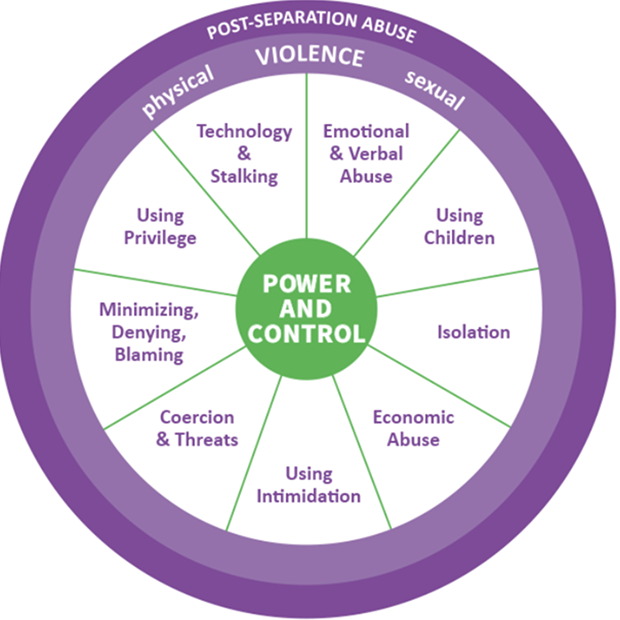
Power & Control Wheel
While every experience of DV is unique, survivors experience a loss of control over their own life and wellbeing. The Power and Control Wheel was developed to identify common patterns of behaviors that survivors can experience from an abusive partner. Abuse includes any act, whether physical, emotional, verbal, in nature and impact, that one person takes to force their will on another.
The survivor may experience an attempt to control everything about the relationship:
- Their attention/time
- Their relationships with family and friends
- Their physical appearance
- Sexual activity
- Finances
- Parenting children
Signs & Types of Abuse
- Physical abuse is a powerful way that an abusive person gets and keeps their partner under control and it instills an environment of constant fear, and commonly gets worse over time.
- While physical abuse is the form of abuse that is most commonly known, it may or may not be a part of an abusive relationship.
- If there is no physical abuse in the relationship, it may begin to occur when the victim is pregnant or when the victim is considering leaving the relationship.
- Physical violence may include: hitting, punching, kicking, slapping, strangling, smothering, using or threatening to use weapons, shoving, interrupting your sleep, throwing things, destroying property, hurting or killing pets, and denying medical treatment.
- Some form of sexual abuse is common in abusive relationships but it is often the least discussed, and it can be subtle or overt.
- The impact of sexual abuse on the victim is commonly feelings of shame and humiliation.
- Sexual abuse may include: physically forcing sex, making you feel fearful about saying no to sex, forcing sex with other partners, forcing you to participate in demeaning or degrading sexual acts, violence or name calling during sex, denying contraception or protection from sexually transmitted diseases, and cheating/having multiple partners.
- Emotional abuse occurs in some form in all abusive relationships.
- Emotional abuse is a very effective tactic used by abusive partners to obtain power and control and can cause extreme damage to the victim’s self esteem.
- Commonly, emotional abuse makes the victim feel like they are responsible for the abuse and to feel crazy, worthless and hopeless.
- Emotional abuse can be so damaging that many survivors of domestic violence report that they would rather “be hit” than endure the ongoing psychological damage of emotional abuse.
- Emotional abuse can include: constant put downs or criticisms, name calling, “crazy making”, acting superior, minimizing the abuse or blaming you for their behavior, threatening and making you feel fearful, isolating you from family and friends, excessive jealousy accusing you of having affairs, and watching where you go and who you talk to.
- Financial abuse is one of the least commonly known but one of the most powerful tactics of entrapping a victim in the relationship.
- Financial abuse can be so powerful that many victims of abuse describe it as the main reason they stayed in an abusive relationship or went back to one.
- Some forms of financial abuse include: giving you an allowance, not letting you have your own money, hiding family assets, running up debt, interfering with your job, and ruining your credit.
For national statistics: ncadv.org/statistics
For state-by-state statistics: ncadv.org/state-by-state
Talking to Teens
One in three adolescents in the United States experiences dating violence. There is hope when a teen you care about is in an abusive relationship. Call the Sarah’s Inn 24-hour crisis line for information about Sarah’s Inn services for teens and help with creating a safety plan.